
How people read text: three main patterns
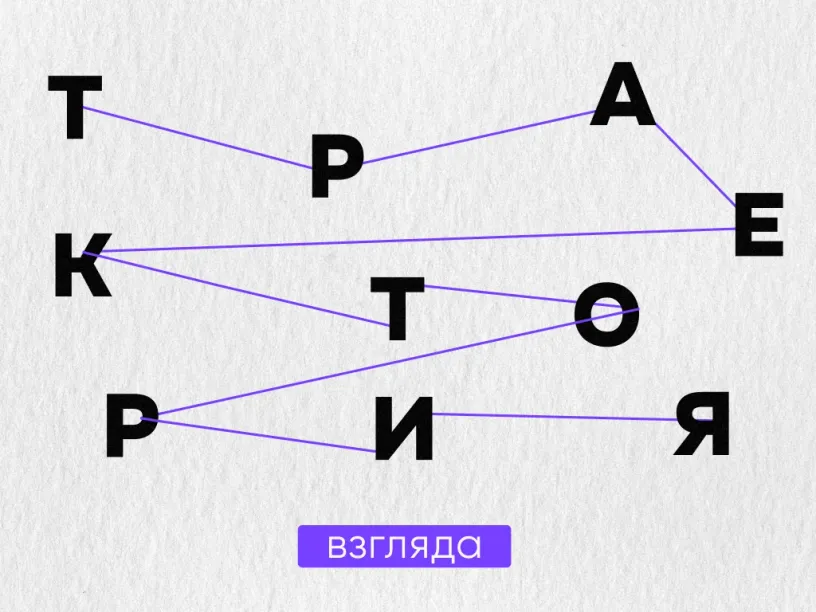
In short
People often skim text on a screen, picking out key information. We look at the F-pattern, the Z-pattern and spotted reading with recommendations for articles, landing pages and social networks.
Text reading patterns help understand how users perceive information on a screen. Unlike books, web pages are often scanned quickly, picking out headings, highlighted phrases and key ideas.
A user’s eye may move along certain paths. Such ways of scanning are called reading patterns.
Understanding these regularities helps structure content better and make it easier to take in.
Let’s look at three main options: the F-pattern, the Z-pattern and spotted reading.
The F-pattern: reading articles and blogs
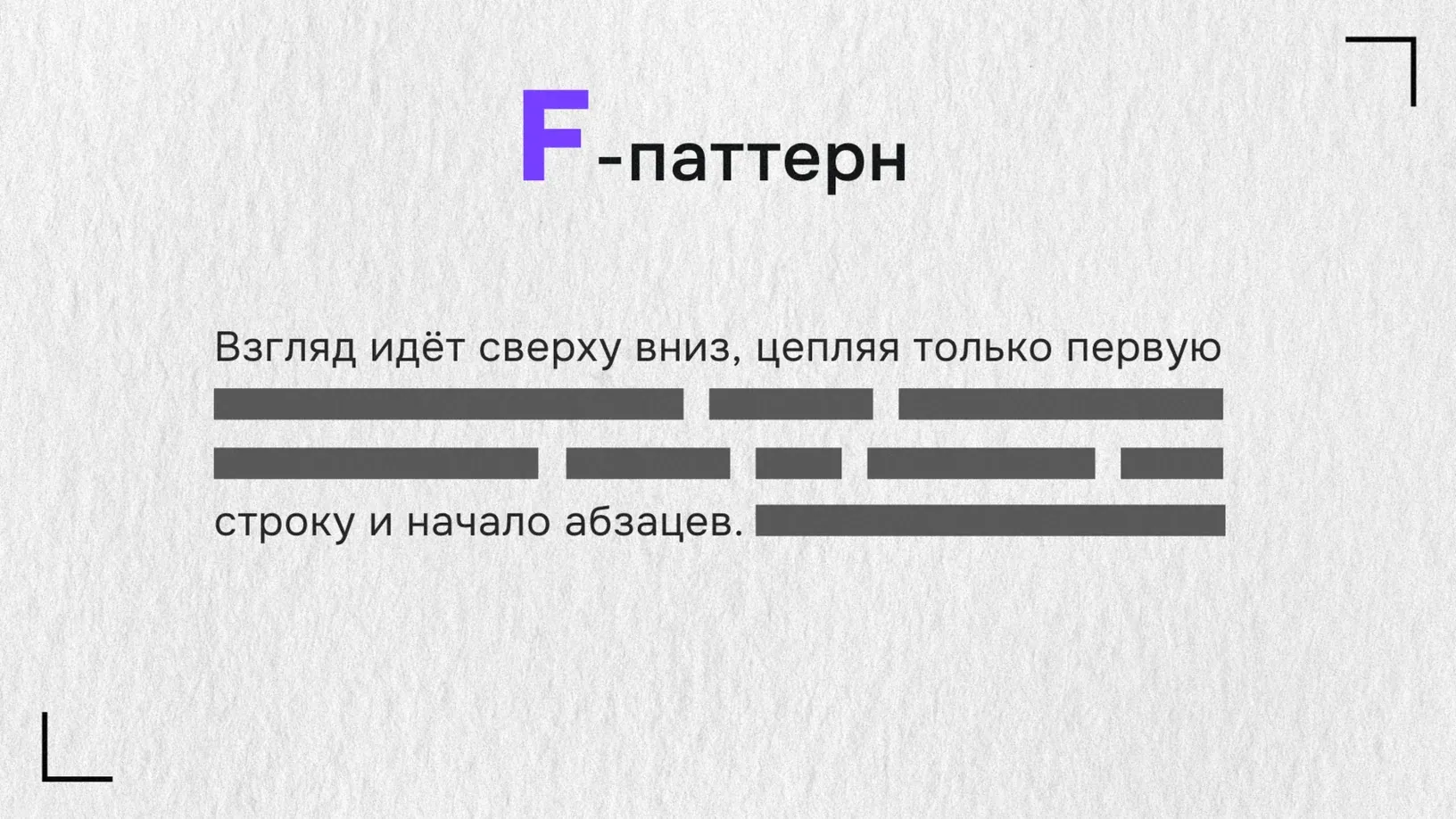
The F-pattern is typical for information-rich pages: articles, news and blogs.
With this kind of scanning the eye may move along a path resembling the Latin letter F:
- First the user scans the top part of the text horizontally.
- Then goes lower and reads horizontally again.
- After that quickly scans the rest of the text vertically.
Recommendations:
- Place key information in the first paragraphs.
- Use subheadings to structure the text.
- Highlight important phrases in bold or with underlining.
The Z-pattern: reading visually simple pages
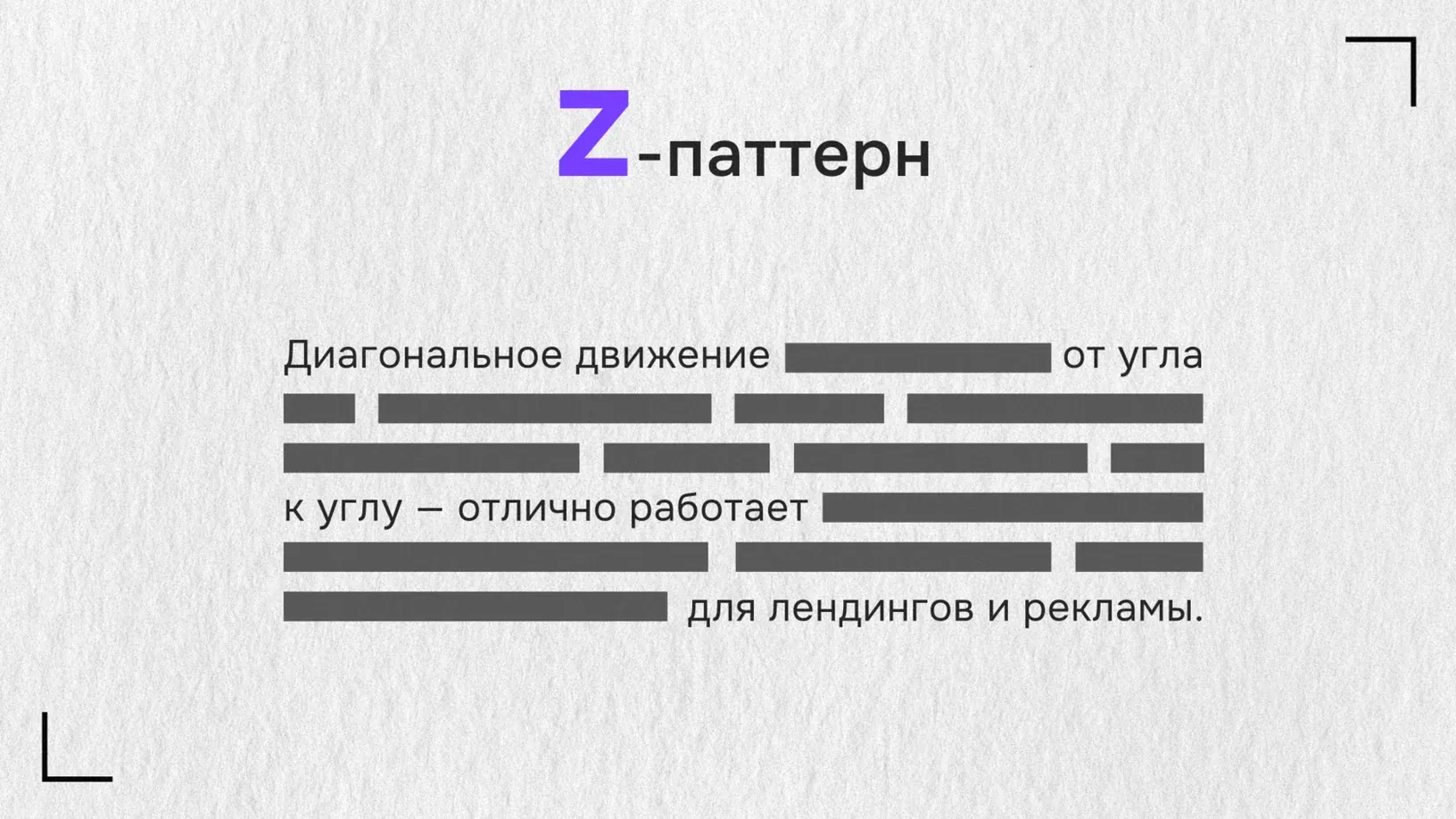
The Z-pattern is typical for short texts and pages with a simple visual structure, for example landing pages.
The eye moves across the page in a zigzag:
- First the user scans the top part of the page horizontally.
- Then moves the eye diagonally to the bottom part.
- Finishes scanning with a horizontal movement along the bottom of the page.
Recommendations:
- Place the logo or heading in the top left corner.
- Place the call to action in the bottom right corner.
- Remove extra visual elements that distract attention.
Spotted reading: attention on individual elements
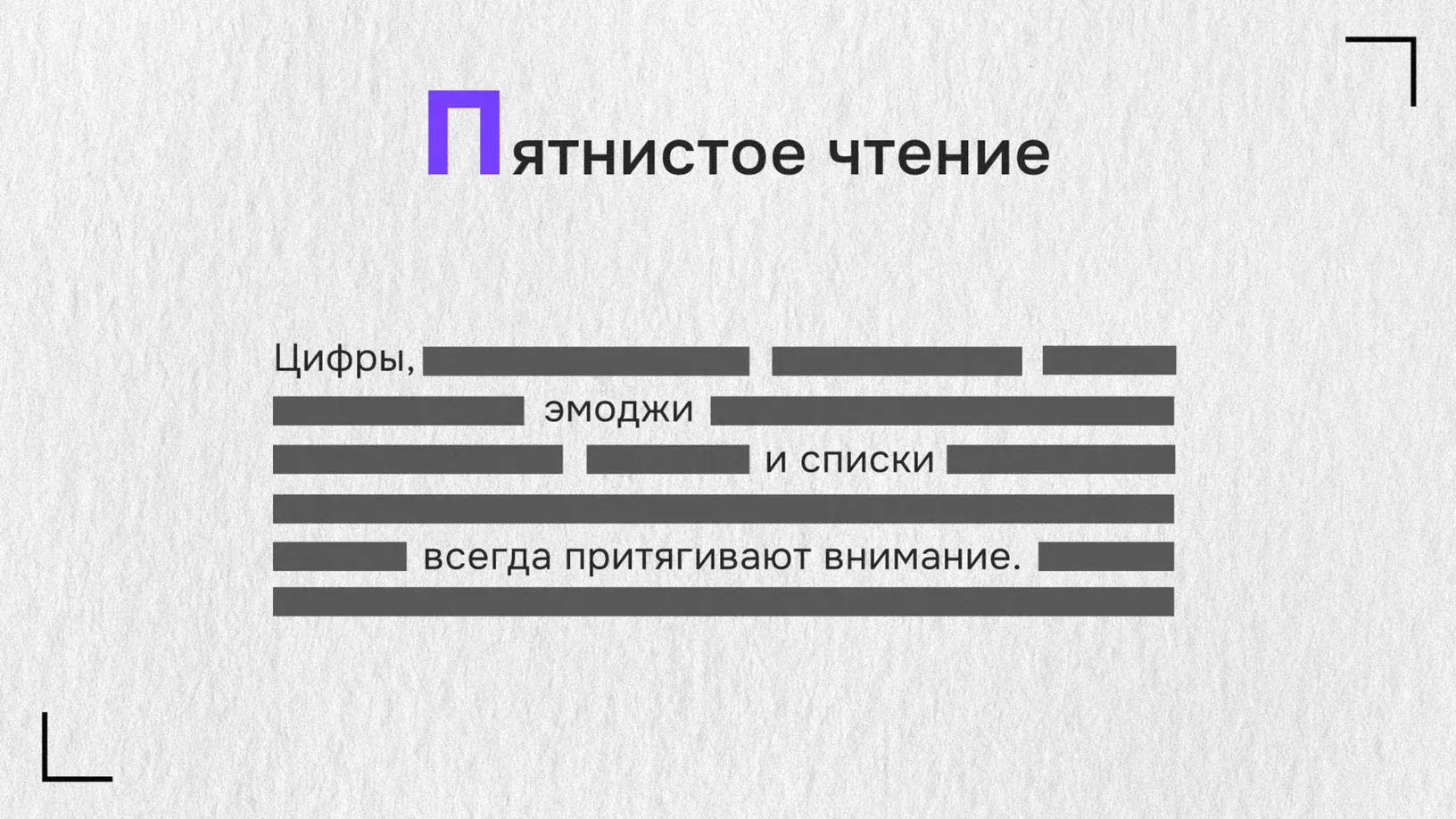
In spotted reading the eye moves between prominent elements of the text.
Such a way of scanning can be found in social networks and messengers, where the user quickly judges the content of a post.
Attention is attracted by:
- Numbers. For example, “5 tips for productivity”.
- Emoji. Can help structure text and convey emotions.
- Highlighting. Bold and italic draw attention to key fragments.
Recommendations:
- Break the text into small paragraphs.
- Use numbers and visual accents to highlight information.
- Use lists to make it easier to take in.
General recommendations for formatting text
Whatever the way of reading, it is important to make the text easy to scan.
- Readability. Use fonts and sizes that are easy to read from a screen.
- Brevity. Remove extra words and sentences so as not to overload the material.
- Contrast and structure. Leave enough space between lines and create clear visual accents.
- Calls to action. Make them noticeable and clear to the user.
Conclusion: how to take text reading patterns into account
Understanding reading patterns helps create materials that are easier for users to scan and understand.
Focus on the specifics of each format:
- The F-pattern — for long informational texts.
- The Z-pattern — for landing pages and visually simple pages.
- Spotted reading — for posts in social networks and messengers.
Experiment with structure and highlighting to guide readers’ attention to the important elements of the content.
Other useful articles are available on the Dzen channel.
Questions on the topic
What is the F-pattern of reading?
A way of scanning text in which the eye first moves horizontally across the top lines and then gradually shifts down. Typical for informational materials.
Which pages does the Z-pattern suit?
Visually simple pages with a small amount of text, for example landing pages.
What is spotted reading?
A way of scanning in which attention moves between prominent elements: numbers, highlighted words and other visual accents.


